
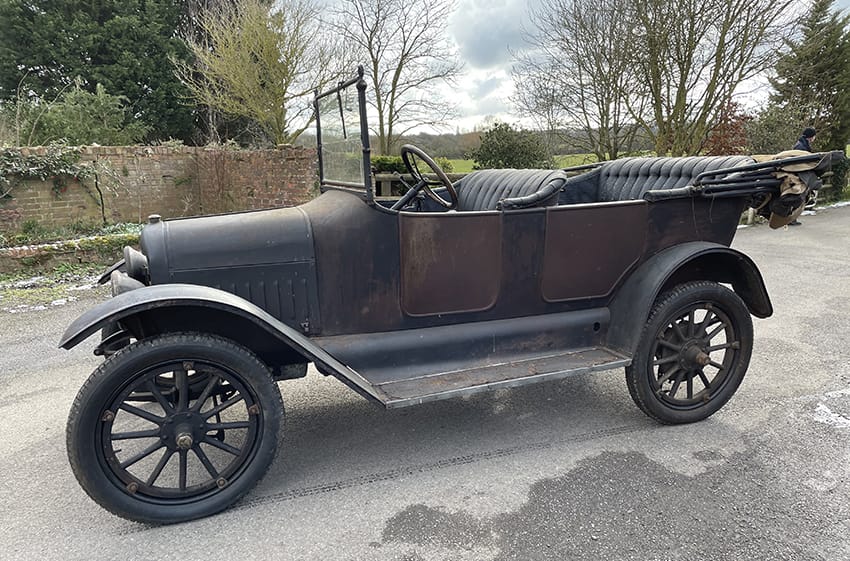
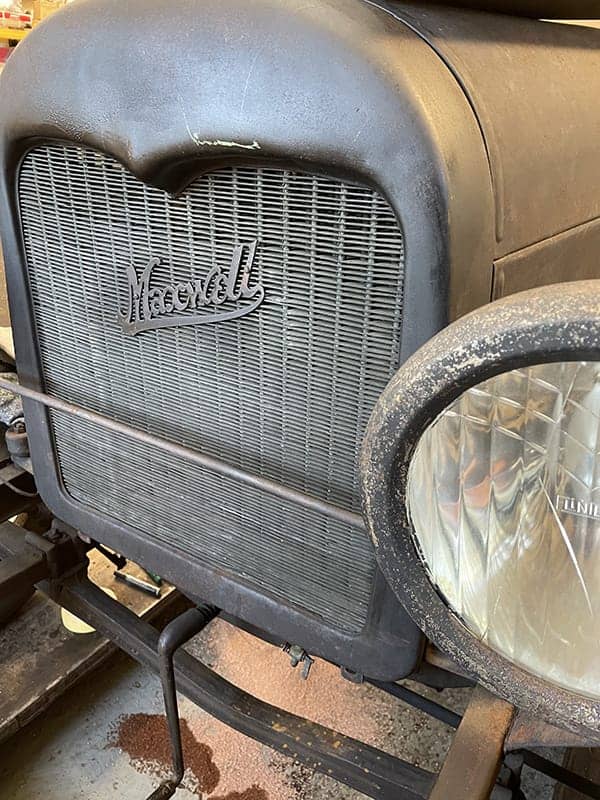
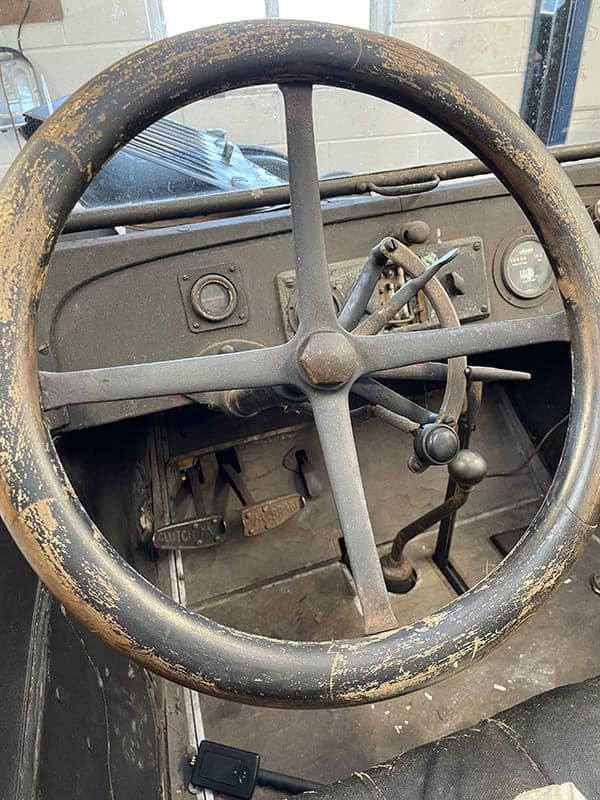
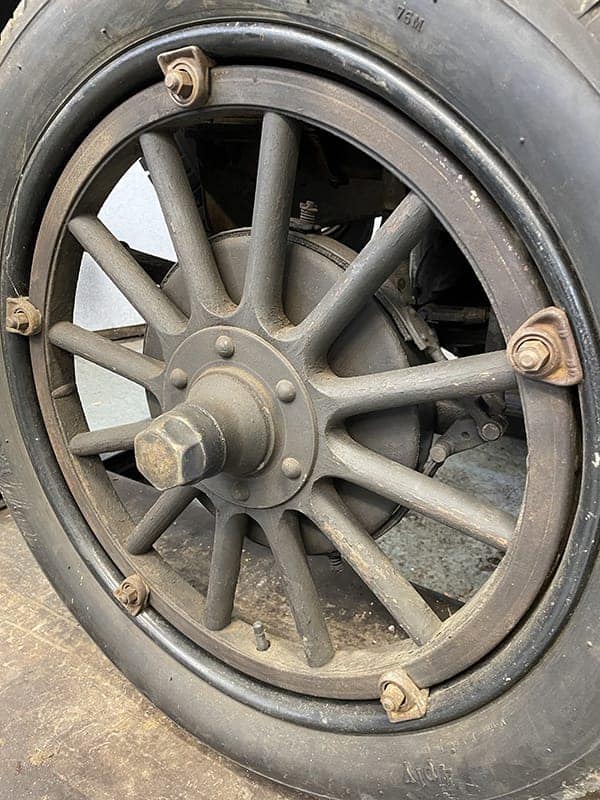
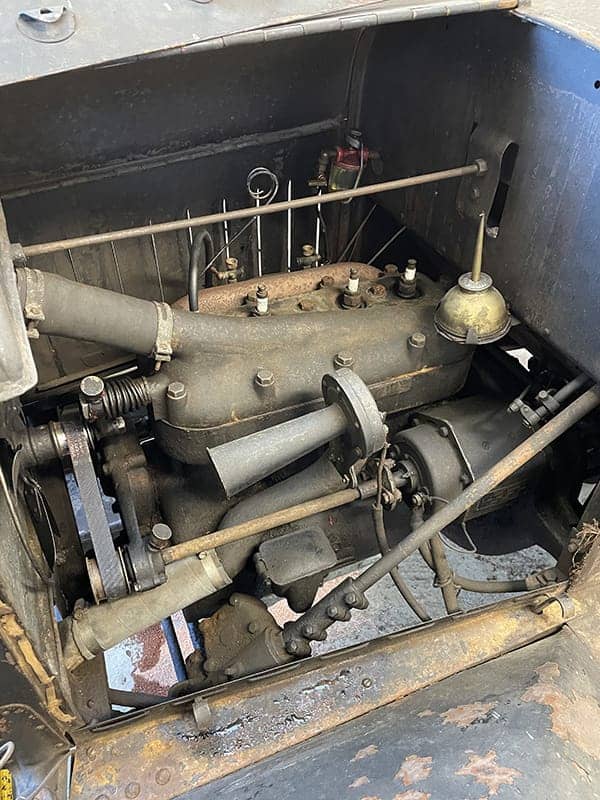
At Tim Walker Restorations, we are fortunate to work on a wide variety of vehicles, from the very earliest invention of the car through to the most stylish modern classics. In our time, however, we have never come across a Maxwell… until now! We thought we ought to share the history of the Maxwell motor company as well as some photos of the Maxwell that we have been entrusted with. Maxwell was a forward-thinking company that were well ahead of their time, especially with their appreciation of women!
History of the Maxwell motor company
Maxwell was an American motor company, that first began manufacturing in 1904 and ceased in 1925. They began under the name of ‘Maxwell-Briscoe company’ of North Tarrytown, New York, named after founder Jonathan Dixon Maxwell and his business partner, Benjamin Briscoe. J.D.Maxwell had previously worked for the Oldsmobile marque, and Briscoe was part owner of the Briscoe Brothers Metalworks.
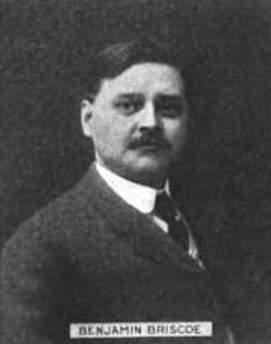
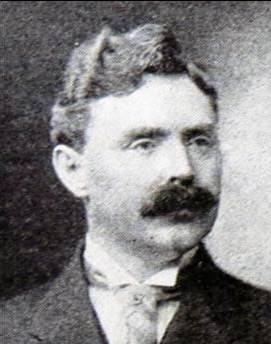
Maxwell was an American motor company, that first began manufacturing in 1904 and ceased in 1925. They began under the name of ‘Maxwell-Briscoe company’ of North Tarrytown, New York, named after founder Jonathan Dixon Maxwell and his business partner, Benjamin Briscoe. J D Maxwell had previously worked for the Oldsmobile marque, and Briscoe was part owner of the Briscoe Brothers Metalworks
Following a disastrous fire that destroyed the New York factory in 1907, Maxwell-Briscoe opened a new factory in Indiana. Both Maxwell and Briscoe shared a similar approach as well know Henry Ford, trying to own the entire process of vehicle manufacturing. The newspapers reported that the factory “will operate as a whole, like an integral machine, the raw material going in at one end of the plant and the finished cars out the other end.”
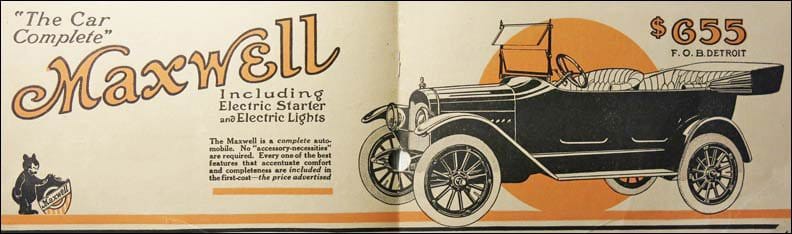
For a time, Maxwell was considered one of the three top automobile firms in America, along with General Motors and Ford. In 1913, the Maxwell assets were overseen by Walter Flanders, who reorganized the company as the Maxwell MotorCompany, Inc. The company moved to Highland Park, Michigan. By 1914, Maxwell had sold over 60,000 cars!
Maxwell eventually over-extended and wound up deeply in debt, with over half of its production unsold in the post-World War I recession in 1920. The following year, Walter P Chrysler arranged to take a controlling interest in Maxwell Motors, subsequently re-incorporating it in West Virginia with himself as the chairman. One of his first tasks was to correct the faults in the Maxwell, whose quality had faltered. This improved version of the car was marketed as the “good Maxwell.”

Driving towards equality
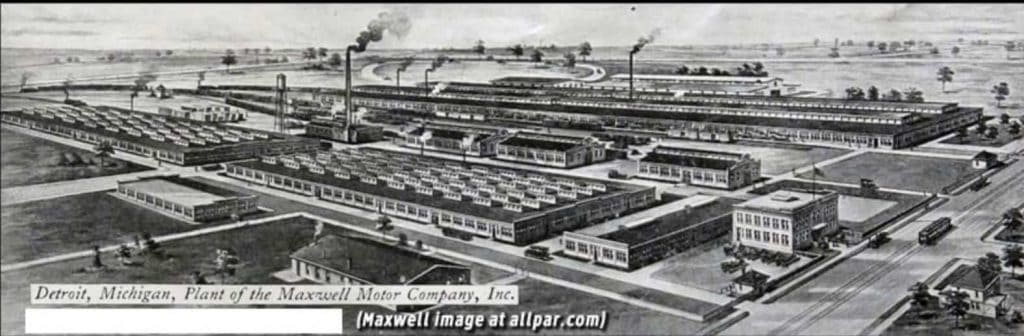
Maxwell was one of the first car companies to market specifically to women. In 1909, it generated a great deal of publicity when it sponsored Alice Huyler Ramsey, an early advocate of women drivers, as the first woman to drive coast-to-coast across the United States. By 1914, the company had strongly aligned itself with the women’s rights movement. That year, it announced its plan to hire as many female sales personnel as male. At that time, it offered a promotional reception at its Manhattan dealership which featured several prominent suffragettes such as Crystal Eastman, while in a showroom window a woman assembled and disassembled a Maxwell engine in front of onlookers.
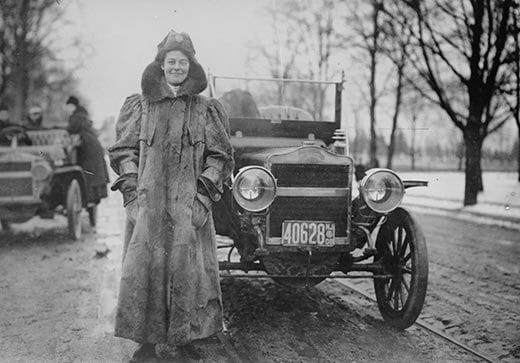
During the early years of Maxwell Motors, women were an essential part of the company and helped to move it forward. During World War I, the Maxwell Motor Car Company offered many new positions for women in the work place. From factory workers to clerical assistants, and sales women to handling machinery, women were beginning to make their mark on automotive history.
Approximately 1,600,000 women joined the workforce between 1914-1918 making this a historical mark in women’s history
Hello. I am the proud owner of a 1919 Briscoe touring car made in Brockville, Ontario. I am looking for other owners of Briscoes.
Hello,
I was pleased to find this report on a Maxwell project. I am in central Canada and find there is very little knowledge or awareness of Maxwell vehicles, yet they deserve a prominent place in auto history as forerunner to the well known Chrysler.
Mine is a 1920 model 25 bush find. This car really was a goner but it found it’s way back to life as star of the show. Yours is a few years older but looks like a wonderful survivor. I know of only one other Maxwell (1917) in Manitoba.
All the best with this project.
Bernie
Bernie, the Elkhorn MB car museum has a 1914 model on public display if you’d be interested in that, unless that the one you are thinking of, and mistook the year.
Did Maxwell make a vehicle with solid rubber tires?i know of a frame with Maxwell hub caps on wheels with solid rubber tires —looking for info.on this subject .
I have an old photo (c 1918-1925, date unknown) I found featuring a 1918-era Maxwell, with a woman near the car which was parked on the side of the road. Free for you to use if you like. I found it in an old box of photographs I bought at an antique store in upstate NY. Took a while to cipher out the make of the car, but it was an enjoyable journey! Let me know how to get it to you.
Jack Benny drove a Maxwell
I am 76 years old and writing from northeastern Spain. My father, a mechanic by profession, unearthed and restored a 1918 Maxwell. I don’t know the model, but the license plate was GE-276. This was the only car my family had during my childhood, and the one I learned to drive in many years before getting my license. (It just so happens that when the Spanish Civil War broke out, those few people who owned a car often had it requisitioned by the army against the delivery of a signed receipt and under the promise that they would get it back once the war was over. Often those who had the means to hide them did so and so a farming family in my village dug a large hole in a field and buried it after protecting it with a large wooden box. After the war ended, they lost interest in recovering the Maxwell due to the time that had passed and the great difficulty that its extraction would entail and possible mechanical work to put it back into operation. My father, who repaired the tractor and other agricultural machinery, found out about the Maxwell and offered to extract it and try to get it running if it was handed over to him free of charge. So he dug it out and in a process of approximately a year he restored the engine and transmissions, and repaired some very deteriorated parts of the body, having to rebuild Some parts of the rear end were made of wood. The four-cylinder engine had valves in the block actuated by tappets and rods from the camshaft located at the bottom. It was water-cooled without a circulation pump, that is, by thermosiphon, although it did have a belt that drove the fan. It could be started with a crank, taking the precaution of moving the “advance” control to the “retard” position; failure to do so easily caused self-ignition and a strong “kickback” of the crank that could damage the arm. This model also had an electric starter motor forming part of the same assembly as the dynamo (dynastarter), and the shaft itself drove the fan belt. Curiously, it was right-hand drive. My father told me that in the past they had a central steering wheel, later they became right-hand drive, and it wasn’t until later that left-hand drive was adopted for driving on the right side of the roads, except in the United Kingdom. United Kingdom and Commonwealth countries that adopted the left-hand driving style, as is still the case today. The inverted bronze carburetor (Manfer patent) had a threaded connector on the top of the bowl, and the fuel tank could be filled with kerosene with the fuel tap closed. After filling the carburetor ditch with gasoline through the threaded plug, the engine was started, and before the small amount of gasoline contained in the carburetor was exhausted, the tap was opened and the engine continued running on kerosene, although it lost some power, but it was more economical than running on gasoline. I don’t know if this carburetor was the original, but I’m inclined to think that the car originally had another carburetor, probably a Maxwell, since the brand tended to manufacture all the components. I can’t say much more detail: it had three speeds forward, we called them first, second, and direct, and reverse, and the starter motor was operated with the left foot. By pressing a pedal next to the gearshift, which moved the gear until it meshed with the engine flywheel, the same pedal connected the current to the starter motor. It ran at 6 volts. It brings back a ton of memories, because after many years of keeping it, my parents decided to sell it to a scrapyard in Girona, and from then on, I lost track.
I would really really like to have a Maxwell